
When we access our accounts, we are entering into a silent contract of trust with the platform. At Level up Casino, we maintain that trust should never be overlooked, especially in a digital environment where personal and financial data meet daily. Two-factor authentication, often shortened as 2FA, embodies a fundamental shift from simply hoping your password is enough to actively confirming your identity remains yours alone. We have seen too many instances where a single breached credential leads to significant stress. By requiring a secondary piece of evidence beyond just a password, we establish a protective barrier that travels with you, adapting to new threats and making unauthorized access exponentially more difficult for malicious actors targeting our community.
Protecting Yourself from SIM Swap Vulnerabilities
A major concern in modern authentication focuses on SMS-based verification codes, a method we have intentionally moved away from for high-value actions. Criminals have mastered a technique called SIM swapping, where they trick a mobile carrier to transfer your phone number to a SIM card they control. Once they control your number, any text message containing a verification code goes directly to their handset, evading your physical phone entirely. This attack does not require malware on your device or any technical hacking; it exploits human processes at the telecom level. Recognizing this systemic weakness, we urge all members to migrate from SMS two-factor authentication to application-based or hardware-based methods immediately.
If your account currently uses text message codes, we strongly recommend you to navigate to the security dashboard and begin a migration to an authenticator app or security key. The transition takes only a few minutes but closes a vulnerability that has cost individuals considerable sums across the industry. During the transition, we verify your identity through a combination of existing factors and support checks to prevent an attacker from hijacking your two-factor method. We also suggest setting a unique PIN or passcode with your mobile carrier specifically to block unauthorized SIM porting requests. This defense-in-depth approach secures that the security chain does not break at the weakest link, which often lies outside the direct control of any online platform but still jeopardizes your account.
Handling Multiple Devices and Session Persistence
We acknowledge that modern life involves shifting between a primary phone, a tablet, a laptop, and perhaps a desktop computer. Our two-factor authentication system addresses this reality gracefully by supporting multiple registered devices and session persistence with rigorous constraints. When you successfully authenticate with two factors on a trusted personal laptop, you can designate that browser as trusted for a finite duration. This employs a secure token stored in the browser’s local storage, encrypted and tied to that specific installation. Our system continuously checks for anomalies in IP geography and browser fingerprint, and if a discrepancy appears, it demands a fresh second factor challenge even if the session was previously marked as trusted.
We suggest exercising careful judgment when marking public or shared computers as trusted. A library terminal or hotel business center computer should never be granted persistent session status, regardless of the convenience offered. In those scenarios, opting for a full two-factor challenge every time, combined with private browsing mode, guarantees that no residual cookies or tokens remain after you close the window. For managing multiple personal devices such as an iPad and an Android phone, we suggest installing your authenticator application on both devices by scanning the same QR code during the initial setup phase. Alternatively, use a cloud-synced authenticator like Authy that encrypts your seeds with a master password you alone control, allowing secure multi-device code generation without weakening the fundamental security model.
Understanding Time-Based One-Time Passwords
The system that powers most authenticator apps is known as TOTP, or Time-Based One-Time Password algorithm. It depends on a shared secret produced during the QR code scan and the current time to generate a numeric code. Because both your phone and our server agree on the time, they independently generate the same result without any internet connection required on your phone during login. This offline capability is a significant security win, because the code generation cannot be intercepted over a cellular network. The algorithm also accepts slight clock drifts of a few seconds, making sure that your login continues smoothly even if your device clock is not perfectly synchronized, although we recommend enabling automatic time synchronization in your phone settings for the best experience.
The evolving nature of TOTP introduces a moving-target defense that static codes simply cannot equal. Even if a sophisticated attacker captured your screen during a login session yesterday, that code is mathematically invalid today because it has long since run out and the algorithm will never repeat it predictably. We view this temporal bounding particularly relevant for casino accounts where monetary transactions occur regularly. It establishes a forensic gap between a potentially exposed session and future access, implying that a single slip in vigilance does not lead into a permanent vulnerability. The constant churn of digits functions as a heartbeat for your account’s defense, demonstrating that the entity attempting entry is holding the authorized device right now.
Recovery Procedures When a Factor Is Lost
Losing access to your two-factor device is a challenging moment, but we have built a recovery workflow that regains access without opening a backdoor for attackers. The process begins in the login interface, where a specific recovery pathway invokes a manual identity verification sequence. We demand a combination of information only the legitimate account holder would hold, including proof of identity through uploaded documentation and answering detailed questions about recent account activity. Our compliance team evaluates these submissions with human scrutiny, knowing that automated resets based solely on email access would defeat the purpose of having a second factor in the first place.
This manual review step is purposefully designed to take a specific amount of time, blocking an attacker from speeding through an automated reset while you sleep. The cooling-off period embedded in the review process acts as a safeguarding tripwire, offering you an opportunity to contact support directly if the recovery request was unauthorized. We also advise preemptively setting up a secondary two-factor method, such as a backup security key or a trusted family member’s phone number, so that you never face a single point of failure. By allocating the recovery pathways thoughtfully, you create a strong mesh that bends under pressure rather than breaking and locking you out permanently of your own account.
Setting Up Two-factor Authentication at Level up Casino
When you navigate to the security settings within your Level up Casino account, you will discover an intuitive interface designed to get your protection active within minutes. We prioritize clarity over complexity, so the system leads you through linking your account to an authenticator application of your choice. The most common method involves scanning a QR code presented on your screen using an app such as Google Authenticator, Authy, or Microsoft Authenticator. Once scanned, the application generates a time-based one-time password that refreshes roughly every thirty seconds, creating a continuously changing lock that only your physical device can open. We never store the seed secret for this code in a way that can be reverse-engineered by support staff, guaranteeing zero-knowledge privacy.
During the setup, we highlight the vital importance of saving your recovery codes in a protected, offline location. These one-time use backup strings are your emergency keys should your mobile device be stolen or damaged. Print them out on paper and store them with your important documents, or save them in a specific password manager vault. Never store them as a screenshot in your cloud photo library, because a compromise of that cloud account would essentially hand over the bypass keys. We recommend treating these recovery codes with the same care you would apply to the seed phrase of a cryptocurrency wallet, because they perform an equivalent function in restoring access to your digital identity within our ecosystem.
Some players prefer to use biometric authentication as the second factor, especially on mobile devices where a fingerprint or facial recognition scan is smoothly integrated. We fully support these current standards, including WebAuthn, which allows your device to act as a physical security key. By registering your phone or laptop’s built-in biometric sensor with our platform, you can log in with a quick touch or glance without ever typing a code. This method binds the authentication to the cryptographic chip inside your device, making it resistant to SIM swap attacks and far more resistant against remote phishing attempts. It constitutes the current gold standard for balancing frictionless access with military-grade protection.
Why Passwords Alone Simply Aren’t Enough
The online world has evolved far beyond the point where a complex string of characters offers adequate security levelup-casino.eu. Credential stuffing attacks, where automated bots test stolen username and password combinations across thousands of websites, have become a daily reality for major platforms. If you repeat passwords between services, a breach at a minor forum can open your financial accounts and entertainment profiles. We have observed that even strong, unique passwords can be captured silently by keyboard loggers or sophisticated man-in-the-middle attacks without the user ever realizing their machine is compromised. The sheer volume of data breaches reported annually proves that passwords are no longer secrets—they are liabilities that need a additional pillar to remain effective.
Human memory is also a constraining factor that compromises the password model. The average person now juggles dozens of accounts, leading to password fatigue where convenience overrules security. People write down credentials, store them in unencrypted notes, or reuse variations of the same root phrase. We recognize this friction, which is precisely why two-factor authentication acts as a safety net. It accepts human limitations and digital frailties by introducing a dynamic element that shifts with every session or ends rapidly. This means a stolen password instantly becomes useless the moment we request the second factor, neutralizing threats before they can develop into full-blown account takeovers and preserving the integrity of your balance and personal data.
The function of Biometrics in Your Login Flow
Fingerprint scanners and facial recognition systems have matured from novelty features into robust security components tied to dedicated hardware enclaves. When you open the Level up Casino mobile application on a modern device, the biometric prompt validates your fingerprint against the template stored exclusively in the Trusted Execution Environment or Secure Enclave. We never get your raw fingerprint data; we only get a cryptographic assertion attesting that the holder of the enrolled finger approved the login. This architecture means that even if our servers were fully compromised, a replay of your login would be impossible because the biometric secret never leaves the physical silicon of your phone, keeping your immutable characteristics against remote theft.
Biometric factors shine in their resistance to shoulder surfing and casual observation. No bystander can remember your fingerprint with a passing glance the way they might recall a PIN typed on a screen. However, we highlight that biometrics serve a dual role as both convenience and security, and legal thresholds for compelling fingerprint unlocks differ by jurisdiction. For maximum protection in all scenarios, you can set up your device to require the physical passcode instead of biometrics after a power cycle. We consider biometrics an excellent complement to a reddit.com strong password, creating a layered defense that is tremendously difficult to bypass unless an attacker gains both your password and physical custody of your unlocked device while applying coercive pressure.
The Anatomy of Modern Authentication Factors

Authentication factors are traditionally broken down into three separate categories, and comprehending them is the primary step toward controlling your own security posture. The initial category is knowledge-based, which comprises passwords, PINs, and security questions. These are secrets stored in your memory, and while they remain the most prevalent layer of identity verification, they are additionally the most vulnerable to phishing and social engineering. The subsequent category is possession-based, a tangible item like a mobile phone, a hardware security key, or a smart card. Possession of this device proves you are the rightful owner because intercepting a physical object remotely is significantly harder than breaching a database entry.
The third category, often used in high-security environments, is biometric-based. This encompasses biometrics such as fingerprints, retinal scans, and voice recognition patterns. When we merge two of these distinct categories, we attain two-factor authentication. It is not simply having two passwords, which would be two layers of the same factor and similarly vulnerable. Genuine security appears when a system demands you to know your password and physically hold your phone to approve the login. At Level up Casino, our architecture relies on this combination to ensure that even when your password is compromised in an unrelated data breach, the missing physical factor maintains your gaming account ironclad and entirely inaccessible to intruders.
Spotting Phishing Attempts Even with Two-factor Authentication
Despite two-factor authentication enabled, you must remain vigilant against real-time relay phishing attacks. In this elaborate scheme, an attacker creates a fake website that mimics our login screen precisely. When you input your password and the one-time code, the fake site sends those credentials immediately to the real Level up Casino back end, logging the attacker in before the code becomes invalid. The attack is effective because you essentially served as a proxy for the criminal. To counter this, we have introduced visibility features that display you a unique login image or phrase that only the authentic site can display, but the most effective defense is always inspecting the browser address bar for the correct domain before entering any digits.
Building a skeptical mindset regarding urgent emails or messages stating your account is locked also stops the initial hook from being effective. Legitimate communications from us will never pressure you to log in through an embedded link within a high-alert timeframe. Rather, they will guide you to manually type the address or use your bookmarked link. We also recommend the use of a password manager, which automatically refuses to fill credentials on domains that do not precisely match the stored entry. This technical control acts as an immutable filter against cleverly misspelled imposter sites and is a habit that provides dividends across every online service you use, not just your gaming account with us.
Physical Security Keys as the Supreme Shield
For players looking for the highest level of account security, we recommend upgrading to a hardware security key supporting with the FIDO2 standard. Devices like YubiKey or Google Titan Key connect via USB-C, Lightning, or NFC and execute cryptographic signatures that verify the authenticity of the website you are logging into. Unlike TOTP codes that could theoretically be phished by a fake login page in real time, hardware keys check the domain and decline to sign a challenge for a fraudulent lookalike site. This browser-to-key communication builds a binding that simply breaks the economic model of phishing, because the attacker would need to personally possess the key plugged into your computer to succeed.
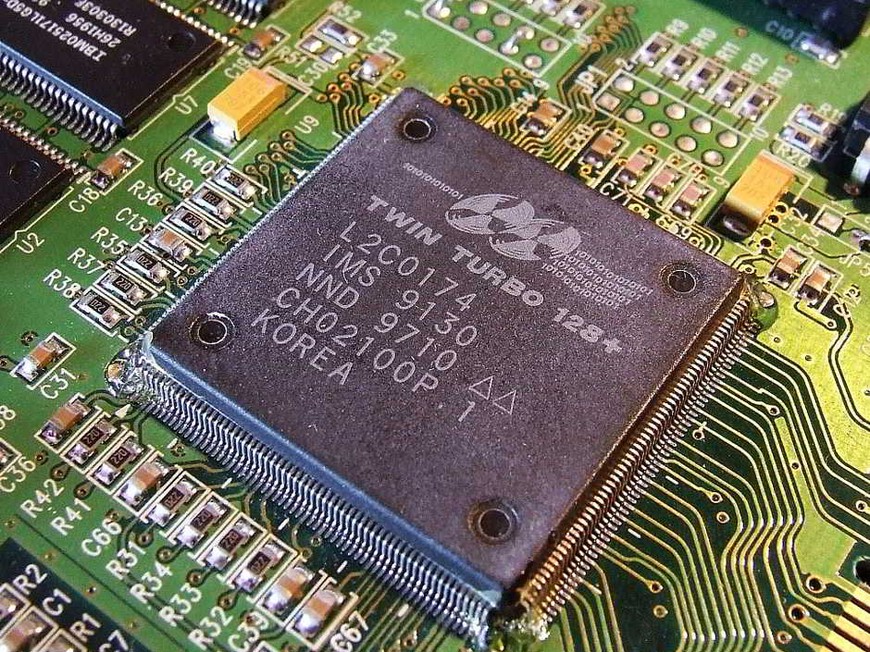
Integrating a hardware key into your Level up Casino account flow is straightforward and adds a concrete dimension to your digital security. You start by registering the key as an authentication method in your account dashboard, tapping the contact on the device when prompted. We enable registering multiple keys, allowing you to keep a backup kept in a safe deposit box or a fireproof safe at home. The latency caused by inserting a key and touching a contact is negligible compared to the catastrophic time and emotional cost of recovering a drained account. In our view, this small tactile ritual—plugging in the key and feeling the physical confirmation—solidifies a mindful security habit that software alone fails to cultivate.
Implementing Two-factor Authentication into Your Daily Routine
Making security a seamless habit rather than a infrequent chore requires minor, intentional adjustments to your daily digital workflow. We recommend placing your authenticator application on your phone’s home screen, directly visible alongside messaging and email apps. This physical prominence lowers the psychological friction of opening the app and searching for a code, converting the act into a instinctive muscle-memory motion. Similarly, if you use a desktop computer predominantly, keeping a hardware security key on your physical keychain assures it is always within arm’s reach, not buried in a drawer that forces you to break concentration and stand up to retrieve it. These contextual design choices make the secure path the easy path.
Think about dedicating a particular time each month to review your authorized devices and active sessions within your account dashboard. This inspection, which might only take five minutes, echoes the financial discipline of checking a bank statement for unfamiliar charges. Remove any session connected to a device you no longer own or a browser profile you have since cleaned. We supply clear geographic timestamps and device identifiers so you can make educated decisions without guesswork. By coupling this monthly hygiene with the automated protection of two-factor authentication, you create a self-reinforcing loop of security mindfulness that protects not only your Level up Casino balance but also your broader digital estate against the unavoidable tide of automated account takeover attempts.